
Host Location
tickets
The Niagara Frontier Food Terminal (NFFT) in Buffalo, NY, is a historic business center that provides commercial, retail, and office space for food and beverage producers, wholesale suppliers, and other businesses, with a mission to support local startups and the arts. It features freight elevators, heavy utilities, security, and is located near major highways, making it a central hub for various tenants like wineries, kombucha producers, and local food distributors.
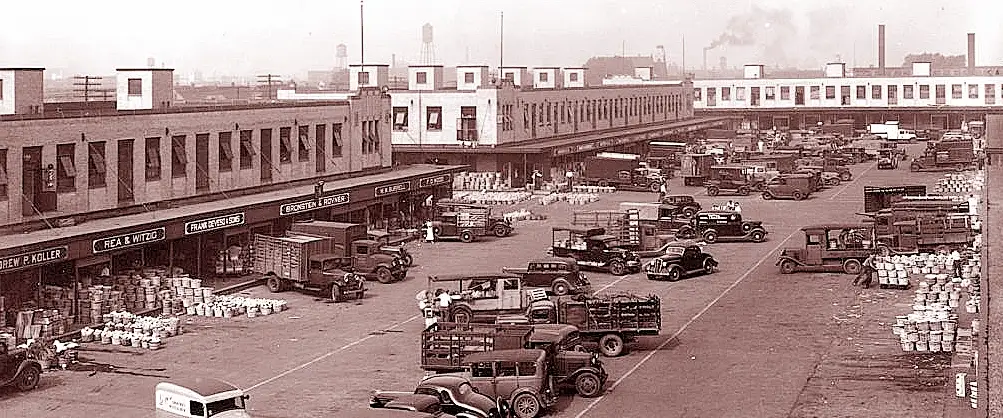
Before the 1930s, Buffalo’s wholesale food trade was centered downtown at the Elk Street Market and Michigan Street district. While prosperous, the area was notoriously gridlocked. Farmers and merchants packed the streets so tightly that it could take a horse and wagon over an hour just to exit the market after completing business. Desperate to escape the smoke, dust, and crushing congestion of the city center, prominent local food proprietors decided Buffalo needed a state-of-the-art facility to handle its growing food demands.
In 1931, these merchants teamed up with the Erie and Nickel Plate railroads to build the Niagara Frontier Food Terminal on a 60-acre site at Clinton and Bailey streets. Built for $5,000,000 (roughly $83 million in 2018 dollars), the location was specifically chosen for its clean air and direct rail access. In a unique financial move, the local merchants pooled the equity from their old downtown properties to buy out the railroads after construction. This made the terminal one of the only entirely privately owned food markets in the nation—a legacy that continues today, as the business is still run by descendants of the original backers.
When it officially opened on March 16, 1931, the terminal was a marvel of modern, scientific design. It featured 10 fireproof buildings divided into stalls with custom refrigeration, ventilation, and sheltered truck-level loading docks. Massive rail lines were built directly into the site, allowing a dedicated yard to handle hundreds of train cars at a time for unloading, inspection, and icing. The grand opening was a major civic event, drawing an estimated 50,000 visitors throughout the day to celebrate what was then the second-largest food terminal in New York State.
Over the decades, the location evolved alongside major shifts in American logistics. The rise of commercial trucking replaced the need for massive rail yards, and modern grocery chains began building their own private warehouses. While the site originally hosted dozens of independent, fresh produce merchants and an attached farmers market, it gradually diversified. Today, the historic terminal operates as a hub adapted for modern needs.